The Ultimate Porto Travel Guide: What to See, Where to Stay & What to Do
Affiliate disclosure: Some links on this page are affiliate links. If you book through one of these links, we may earn a small commission at no additional cost to you. This helps us maintain our travel guides and recommendations.
Porto is one of those cities that seems to get better the longer you stay. Its historic center, the Luís I Bridge and the Monastery of Serra do Pilar form a UNESCO World Heritage site, reflecting the city’s long history and distinctive urban landscape.
Built along the Douro River, Portugal’s second-largest city combines colorful historic buildings, traditional Portuguese architecture, beautiful churches, narrow streets, excellent food, Port wine, and one of the most atmospheric riverfronts in Europe.
But Porto is also a city that rewards a little planning.
The historic center is relatively compact, but it is very hilly. Some of the city’s most famous attractions can become extremely busy, and deciding where to stay can make a big difference to your experience.
That’s why we created this Porto travel guide.
Whether you’re visiting Porto for a weekend, spending several days in Northern Portugal, arriving from Lisbon, or using Porto as a base for exploring the Douro Valley and other destinations in Northern Portugal, this guide will help you plan your trip.
Porto at a Glance
- Country: Portugal
- Region: Northern Portugal
- Currency: Euro (€)
- Language: Portuguese
- Airport: Francisco Sá Carneiro Airport (OPO)
- Best for: History, architecture, food, Port wine, river views, culture and day trips
- Ideal stay: 3–4 days
Porto is smaller and more compact than Lisbon, which makes it relatively easy to explore independently.
However, don’t underestimate the hills.
Walking is one of the best ways to experience Porto, but comfortable shoes are essential. Combining walking with public transportation, taxis, or occasional tours can save you time and energy.
How Many Days Do You Need in Porto?
For a first visit, I recommend at least three full days in Porto.
Three days gives you enough time to explore the historic center, visit the city’s most important monuments, walk along the Douro, cross the Dom Luís I Bridge, explore Vila Nova de Gaia and enjoy a Port wine tasting.
If you have four days or more, even better.
You can then add a day trip to the Douro Valley, Braga and Guimarães, Aveiro and Costa Nova, or another destination in Northern Portugal.
My recommendation
- 2 days: Possible, but rushed.
- 3 days: Excellent for a first visit.
- 4 days: Ideal if you want to add a day trip.
- 5+ days: Great if you want to explore Northern Portugal.
If you’re planning a longer Portugal itinerary, Porto also works particularly well as part of a trip combining Lisbon, Porto and the Douro Valley.
Where to Stay in Porto
Choosing the right neighborhood can make a big difference to your Porto experience.
Porto has several distinct areas, and the best one for you depends on whether you prioritize sightseeing, nightlife, restaurants, atmosphere, luxury hotels, river views or easy access to transportation.
Ribeira
If you want atmosphere, Ribeira is hard to beat.
This is the historic waterfront area of Porto, with colorful buildings, narrow streets, restaurants and spectacular views across the Douro.
It is one of the best places to stay if you want to step outside your hotel and immediately feel surrounded by historic Porto.
The downside?
The streets can be steep, the area can be busy, and some accommodation can be noisy at night.
Best for: First-time visitors, couples, atmosphere, river views and historic Porto.
Find the best hotels in this area: Ribeira Hotels
Baixa & Aliados
For most first-time visitors, Baixa and the area around Avenida dos Aliados are among the most convenient places to stay.
You’ll be close to São Bento Station, Clérigos Tower, Livraria Lello, restaurants, shops and many of Porto’s main attractions.
This is probably the area I would choose if I wanted to explore Porto mostly on foot.
Best for: First-time visitors, sightseeing, restaurants, shopping and convenience.
Find the best hotels in this area: Porto Baixa / Center Hotels
Cedofeita
Cedofeita is a good choice if you want to stay close to the center without being right in the middle of the busiest tourist areas.
The neighborhood has independent cafés, restaurants, galleries and a more residential atmosphere.
You can still walk into the historic center, while enjoying a slightly quieter environment.
Best for: Longer stays, couples, local atmosphere and independent cafés.
Find the best hotels in this area: Porto Cedofeita Hotels
Boavista
Boavista is further west from the historic center and has a more modern feel.
It’s a particularly good option for travelers who don’t need to be directly in the historic center or who are staying several nights.
The area also provides convenient access toward Foz do Douro and the Atlantic coast.
Best for: Longer stays, business travelers, families and travelers looking for a quieter base.
Find the best hotels in this area: Porto Boavista Hotels
Vila Nova de Gaia
Technically a separate city, Vila Nova de Gaia is part of the essential Porto experience.
This is where you’ll find many of the famous Port wine lodges, and some hotels offer spectacular views across the Douro toward Porto.
If river views and wine are high on your list, Gaia is definitely worth considering.
Best for: Wine lovers, river views, couples and hotels with panoramic views.
Find the best hotels in this area: Vila Nova de Gaia Hotels
The Best Things to Do in Porto
Porto has enough attractions to keep you busy for several days, but these are the experiences I would prioritize.
1. Explore Ribeira
Start your Porto experience by walking through Ribeira.
The waterfront is one of the city’s most recognizable scenes, with colorful buildings climbing the hillside behind the Douro.
Take your time here.
Walk along the river, explore the small streets behind the waterfront, stop for a coffee or a drink, and simply enjoy the atmosphere.
Ribeira is particularly beautiful in the late afternoon when the light starts to change over the river.
2. Cross the Dom Luís I Bridge
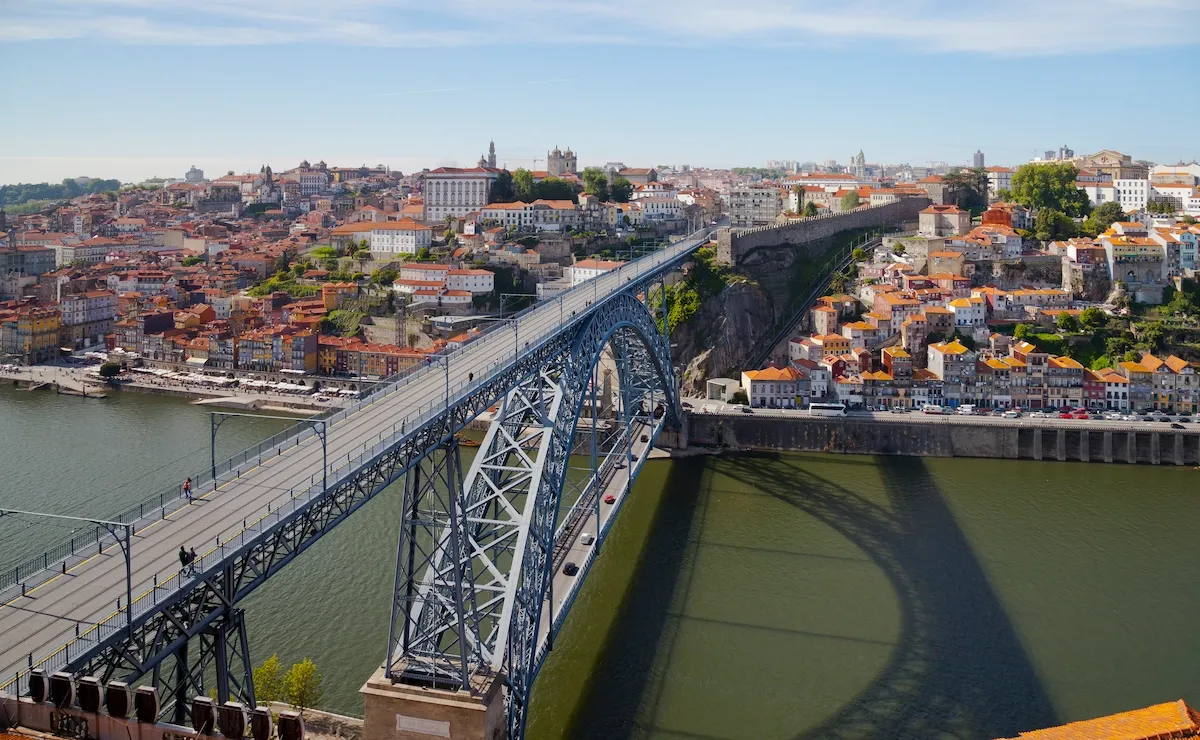
The Dom Luís I Bridge is one of Porto’s most recognizable landmarks.
The bridge connects Porto with Vila Nova de Gaia and offers spectacular views of both cities.
You can cross using the lower level near the river or the upper level.
If you want the best views, walk across the upper level and continue toward Jardim do Morro.
The combination of the bridge, the Douro River and Porto’s historic skyline is one of the city’s classic views.
3. Visit Porto Cathedral
Porto Cathedral, or Sé do Porto, is one of the most important monuments in the city.
Its location is also significant.
The cathedral sits high above the historic center, making the surrounding area an excellent starting point for exploring Porto.
From here, you can walk toward São Bento Station, continue through the center and eventually make your way down to Ribeira.
4. See the Tiles at São Bento Station
São Bento railway station is one of the places you should not skip, even if you aren’t taking a train.
The main hall is decorated with thousands of traditional Portuguese azulejos depicting historical and cultural scenes.
It’s also conveniently located in the center of Porto.
You can easily combine São Bento with the Cathedral, Avenida dos Aliados, Clérigos and Ribeira.
5. Visit Livraria Lello
Livraria Lello is probably Porto’s most famous bookshop.
Its spectacular interior and distinctive staircase have made it one of the city’s most photographed attractions.
It is also one of Porto’s busiest attractions.
If visiting is important to you, I recommend checking ticket availability and planning your visit in advance rather than simply arriving and hoping for the best. The standard Ticket-Voucher is redeemable against eligible books from Livraria Lello Editions, so the admission fee can effectively become part of your book purchase.
Book Livraria Lello tickets: Livraria Lello Tickets
6. Climb Clérigos Tower
The Clérigos Tower is one of Porto’s defining landmarks.
Climb to the top and you’ll be rewarded with panoramic views across the historic center.
There are quite a few steps, so take your time.
If you don’t want to climb the tower, the church and surrounding streets are still worth visiting.
Book Clérigos Tower tickets: Clérigos Tower Tickets
7. Explore Avenida dos Aliados
Avenida dos Aliados is one of the grandest streets in central Porto.
The avenue leads toward Porto City Hall and provides an impressive introduction to the city.
From here, you’re within easy walking distance of São Bento Station, Clérigos, Livraria Lello, Bolhão Market and many restaurants.
8. Visit Mercado do Bolhão
Mercado do Bolhão is one of the best places to experience Porto’s food culture.
The market is an excellent stop if you want to see local products, fresh food and traditional Portuguese ingredients.
It also makes a convenient starting point for exploring the surrounding streets and restaurants.
Don’t rush through it.
Take some time to look around and see how locals shop for food.
9. Taste Port Wine in Vila Nova de Gaia
You can’t properly experience Porto without experiencing Port wine.
Across the Douro in Vila Nova de Gaia you’ll find the historic wine lodges of some of Portugal’s most famous producers.
A wine tasting is one of the experiences I would consider essential on a first visit.
You can visit a wine lodge independently, or book a guided experience if you want to understand more about how Port wine is produced, aged and classified.
Our favorites are Kopke, Graham’s and Taylor’s.
Explore Port wine tastings in Porto: Port Wine Tastings
If you want to learn more about wine, Port wine, the Douro region and Porto’s wine heritage, don’t miss the World of Wine (WOW) in Vila Nova de Gaia. WOW brings together five museums, including the Wine Experience, Chocolate Story, Pink Palace, Porto Region Across the Ages and The Art of Drinking. A Day Pass gives you access to all five museums with one ticket, making it a good option if you want to spend several hours exploring the complex.
Get your World of Wine Tickets here: World of Wine Tickets
10. Visit Jardim do Morro
Jardim do Morro is on the Gaia side of the river, just beyond the Dom Luís I Bridge.
It’s one of the best places to stop for photographs of Porto.
The view across the Douro toward Ribeira is especially beautiful around sunset.
Bring your camera.
You’ll probably use it.
11. Walk Along the Douro River
One of the best things to do in Porto costs nothing.
Simply walk along the Douro.
You can start in Ribeira, continue toward the bridge and eventually cross into Gaia.
Alternatively, explore the Gaia waterfront and enjoy the views back toward Porto.
This is one of those experiences where you don’t really need an itinerary.
Just walk.
12. Take a Douro River Cruise
Seeing Porto from the water gives you a completely different perspective.
The traditional Six Bridges Cruise is one of the most popular experiences, usually lasting around 50 minutes to an hour.
It provides views of Porto, Gaia, the Dom Luís I Bridge and several other bridges crossing the Douro.
A cruise can be particularly enjoyable on a sunny afternoon, and there are also sunset options if you prefer to see the city in the evening light.
Find the best Douro River cruises: Douro River Cruises
13. Visit Foz do Douro
If you have extra time, head west toward Foz do Douro.
This is where the Douro meets the Atlantic Ocean.
The atmosphere here is completely different from the historic center.
You’ll find a waterfront promenade, beaches, cafés and views over the Atlantic.
It’s a great place to slow down for a few hours.
14. Try Porto’s Food
Porto has a strong food culture, and there are several dishes you shouldn’t leave without trying.
Some things worth looking for include:
- Bacalhau (codfish)
- Tripas à Moda do Porto (tripe)
- Bolinhos de Bacalhau (cod fritters)
- Sardines
- Portuguese cheeses
- Cured meats
- Pastéis de Nata
- Port wine
And, of course, the famous Francesinha.
It’s not exactly a light lunch, but it’s one of Porto’s signature dishes and worth trying at least once. If you don’t eat much, consider sharing one.
Don’t limit yourself to restaurants directly around Ribeira.
Some of the best meals can be found away from the busiest tourist streets.
A Local Family-Run Restaurant: Novo Mundo
If you’re looking for something much more traditional and informal, Novo Mundo is one of the places I personally recommend.
This small, family-run restaurant on Rua dos Caldeireiros, in the heart of Porto’s historic center, is the kind of place that can be easy to walk past if you don’t know it’s there.
Don’t expect a trendy interior or a sophisticated tourist menu.
That’s precisely the point.
Novo Mundo feels like a traditional neighborhood restaurant, with simple Portuguese home-style cooking, generous portions and a friendly, informal atmosphere. It’s the sort of place I recommend to travelers who want to experience a more local side of Porto rather than another restaurant designed primarily for tourists.
The menu is generally straightforward, with traditional Portuguese dishes, including fish, seafood, meat and daily specials.
It’s also particularly good value compared with many restaurants in the historic center.
I’ve eaten at Novo Mundo several times myself, and it’s one of those places I like to recommend precisely because it feels authentic and unpretentious.
Novo Mundo
Rua dos Caldeireiros 73
Porto, Portugal
Because it is a small local restaurant, I recommend checking its opening hours before visiting.
If you’re looking for fine dining, this isn’t the place.
If you’re looking for simple Portuguese food, a family atmosphere and a genuine neighborhood experience in central Porto, it is absolutely worth considering.
If you’d like to explore Porto through food, there are also several food tours available.
Explore Porto food tours: Porto Food Tours
Should You Book a Porto Tour?
You absolutely don’t need a tour to visit Porto.
The historic center is easy to explore independently, and walking is part of the experience.
However, a tour can make a lot of sense if:
- You only have one day in Porto.
- You’re visiting Porto as part of a larger Portugal itinerary.
- You want to visit several destinations in Northern Portugal.
- You want to explore the Douro Valley.
- You want to visit wineries without worrying about driving.
- You’re traveling with family or a group.
- You want local recommendations.
- You don’t want to spend time planning transportation.
- You want to combine several places in one day.
The biggest advantage of a private tour isn’t simply transportation.
It’s flexibility.
You can spend more time somewhere you enjoy, skip something that doesn’t interest you, and adapt the itinerary to your group.
Our Porto Experiences
We don’t operate regular tours based in Porto, but we do offer a private Porto day trip from Lisbon and private transportation between Lisbon and Porto. We also offer multi-day itineraries that combine Porto with Lisbon and the Douro Valley.
Porto Private Day Trip from Lisbon
If you’re staying in Lisbon but really want to see Porto, our private Porto day trip allows you to travel north in a private vehicle with your own driver/guide.
The itinerary includes Porto Cathedral, São Bento Station, Avenida dos Aliados, Clérigos, the historic center, Ribeira, Vila Nova de Gaia and a Port wine tasting option.
It’s a long day, but it can be an excellent solution for travelers who don’t have enough time to spend several nights in Porto.
Explore our Porto Private Day Trip from Lisbon → Porto Private Full Day Tour from Lisbon
Traveling Between Lisbon and Porto?
This is where we offer another option that can be particularly useful.
Instead of simply taking a direct train or transfer between Lisbon and Porto, you can turn the journey itself into part of your Portugal experience.
Lisbon to Porto with 3 Stops
Our private transfer from Lisbon to Porto can include stops in:
- Óbidos
- Nazaré
- Aveiro
- Costa Nova
- Tomar
- Coimbra
This allows you to turn the journey between the two cities into part of your Portugal experience. You can choose three stops from several options, and we can adjust the route according to your interests and schedule.
Óbidos offers a beautiful medieval walled town.
Nazaré is famous for its coastline and giant waves during the winter surf season.
Aveiro is known for its canals, colorful moliceiro boats and traditional sweets.
Costa Nova has the beautiful fishermen houses painted in different striped colors.
Tomar was the headquarters of the Knights Templar in Portugal and where you can see the amazing Convent of Christ.
Coimbra is one of the oldest cities in Portugal and home to the oldest university in Portugal.
You then continue to Porto, where you can spend the rest of your trip exploring the city.
See our Lisbon to Porto Transfer with 3 Stops → Porto Transfer with 3 Stops
Porto to Lisbon with 3 Stops
The same concept can also work in the opposite direction.
If you’re finishing your trip in Porto and heading south to Lisbon, the journey can be arranged with stops along the way.
This can be particularly useful if you don’t want to spend an entire travel day simply sitting in a vehicle or train.
Ask us about a private Porto to Lisbon transfer with stops → Porto Transfer with 3 Stops
Porto in 3 Days
If you have three full days, this is the itinerary I would recommend. If Porto is your first stop in Portugal, you can also swap the Douro Valley day for another city day and save the wine region for a longer trip.
Day 1 — Historic Porto
Start in the historic center.
Visit:
- Porto Cathedral
- São Bento Station
- Avenida dos Aliados
- Clérigos Tower
- Livraria Lello
- Carmo and Carmelitas Churches
Then walk downhill toward Ribeira. Go down Rua das Flores if possible.
Spend the afternoon exploring the waterfront.
In the evening, cross the Dom Luís I Bridge (top platform) and enjoy the views from Jardim do Morro.
Finish the day with dinner and a Port wine tasting in Gaia.
Day 2 — Ribeira, Gaia & Foz
Start the morning in Ribeira.
Walk along the Douro and cross the Dom Luís I Bridge.
Spend some time exploring Vila Nova de Gaia and visit one of the Port wine lodges.
Have lunch around Gaia or Ribeira.
In the afternoon, head toward Foz do Douro.
Walk along the Atlantic waterfront and enjoy a slower afternoon away from the busiest parts of the city.
Return to central Porto for dinner.
Day 3 — Douro Valley
Use your third day to visit the Douro Valley.
The Douro Valley is one of the most spectacular regions in Portugal and is famous for its terraced vineyards, wine estates and river landscapes.
A typical day can include:
- Pinhão
- vineyard viewpoints
- wine tasting
- traditional Portuguese lunch
- Douro River cruise
- visits to wine estates
If you don’t want to drive after wine tastings, consider booking a guided tour.
Explore Douro Valley tours from Porto: Douro Valley Tours
Porto in 4 Days
With a fourth day, I recommend leaving Porto for another day trip.
You have several excellent options.
Braga & Guimarães
This is one of the best combinations if you’re interested in history and architecture.
Braga is one of Portugal’s oldest cities and is particularly famous for its religious heritage.
Guimarães is closely associated with the origins of Portugal and has a beautifully preserved historic center.
Explore Braga & Guimarães tours: Braga and Guimarães Tours from Porto
Aveiro & Costa Nova
Aveiro is often called the “Venice of Portugal” because of its canals and traditional moliceiro boats.
The colorful houses of Costa Nova provide a completely different atmosphere just a short distance away.
This is an easy day trip from Porto.
Explore Aveiro & Costa Nova tours: Aveiro and Costa Nova Tours
Peneda-Gerês National Park
If you prefer nature, mountains and waterfalls, consider Peneda-Gerês.
This is one of the best choices for travelers who want something completely different from Porto’s historic streets.
It’s also a much better option if you enjoy hiking and outdoor activities.
Explore Gerês tours from Porto: Gerês Natural Park Tours
The Best Day Trips from Porto
Porto is an excellent base for exploring Northern Portugal.
Depending on how much time you have, consider:
Douro Valley
Best for: Wine, vineyards, scenery, river cruises and food.
Braga
Best for: History, churches, architecture and religious heritage.
Guimarães
Best for: Medieval history, Portuguese heritage and architecture.
Aveiro
Best for: Canals, moliceiro boats and a relaxed day trip.
Costa Nova
Best for: Colorful traditional houses and the Atlantic coast.
Peneda-Gerês
Best for: Mountains, waterfalls, hiking and nature.
Viana do Castelo
Best for: Coastal scenery, history, beaches and Northern Portuguese culture.
Porto and the Douro Valley
If you’re visiting Porto for several days, I strongly recommend considering the Douro Valley.
The region is not simply a collection of wineries.
The landscape itself is one of the main attractions.
Terraced vineyards climb the hillsides around the Douro River, creating some of the most spectacular scenery in Portugal.
The best experience usually combines scenery, wine and food.
A good day in the Douro might include a viewpoint, a vineyard visit, a tasting, lunch and a river cruise.
Find the best Douro Valley experiences: Douro Valley Tours from Porto
If you’re interested in a more personalized private experience, we can also help arrange a longer Portugal itinerary combining Lisbon, Porto and the Douro Valley.
Explore our multi-day Portugal experiences → Multi-day Tours
Porto as Part of a Longer Portugal Itinerary
Porto works particularly well as part of a multi-day trip through Portugal.
A very popular combination is:
Lisbon → Óbidos → Nazaré → Aveiro → Porto → Douro Valley → Lisbon
This allows you to experience several very different parts of the country without constantly changing hotels.
For travelers who prefer private transportation and a flexible itinerary, a multi-day tour can also make the logistics considerably easier.
We offer multi-day private experiences that combine Lisbon and the Douro Valley with Porto.
Explore our Douro Valley & Lisbon multi-day tour → Douro Valley & Lisbon 5 Day Tour
If you’re starting your trip in Porto instead, we can also discuss a customized itinerary that works in the opposite direction.
Getting Around Porto
Porto has a good public transportation network, including:
- Metro
- Buses
- Trams
- Trains
- Taxis
- Ride-hailing services such as Uber and Bolt
However, the historic center is best experienced on foot.
Just remember that Porto is hilly.
The distance between two points may look short on a map, but the climb can make the journey considerably more demanding.
Porto Metro
The Metro is particularly useful for longer journeys and for getting to and from the airport.
Walking
Walking is still the best way to experience the historic center.
Wear comfortable shoes.
Seriously!
Tram
Porto’s historic trams are also an attraction in themselves.
The tram network is smaller than Lisbon’s, but riding one can be a fun way to experience the city.
From Porto Airport to the City Center
Porto Airport is about 11 km from central Porto.
You have several options.
Metro
Usually the easiest option for independent travelers. The airport is served by Metro Line E (Purple), which connects the airport with the Porto network.
Taxi
A convenient choice if you’re traveling with luggage or a group.
Uber / Bolt
Ride-hailing services are widely used in Porto.
Private Transfer
A private transfer can be particularly convenient if you’re traveling with family, a larger group, or lots of luggage.
Compare Porto Airport transfer options: Porto Airport Transfers
Is Porto Expensive?
Porto is no longer the inexpensive European destination it once was, particularly in the most popular summer months.
However, compared with many major European cities, it can still offer relatively good value.
Your biggest expenses will usually be:
- Accommodation
- Restaurants
- Tours and activities
- Transportation
- Wine experiences
Accommodation prices can vary significantly depending on the season.
If you’re traveling during the summer or around major holidays, booking ahead can make a considerable difference, especially for centrally located hotels.
I also wouldn’t recommend choosing your hotel purely based on price.
A hotel in a convenient location can save you considerable time and transportation costs.
Compare Porto hotels: Porto Hotels
When Is the Best Time to Visit Porto?
Porto can be visited throughout the year.
However, each season offers a slightly different experience.
Spring
March through May can be an excellent time to visit.
Temperatures are generally comfortable, the city is lively, and the summer crowds haven’t reached their peak.
Rain is still possible, particularly earlier in spring.
Summer
June through August brings warm weather and long days.
It’s also the busiest period.
Expect higher hotel prices and more visitors, particularly in July and August.
Fall
September and October are among my favorite months for Porto.
The weather can remain pleasantly warm, while the busiest summer period has passed.
The Douro Valley is also particularly interesting during the harvest season.
Winter
November through February is quieter.
Rain is more likely, but if you don’t mind changing weather, winter can be a good time to experience Porto with fewer tourists.
And if you’re interested in seeing Nazaré’s famous giant waves, winter is the season when conditions are most likely to produce them.
Common Mistakes to Avoid in Porto
Trying to See Everything in One Day
Porto may look compact on a map, but the hills and cobblestones slow you down.
Give yourself time to explore. If you have limited time, prioritize the historic center, Ribeira and Gaia rather than trying to check every attraction off your list.
Underestimating the Hills
Comfortable shoes are essential.
Porto is not flat.
Staying Too Far from the Historic Center to Save Money
A cheaper hotel can become less attractive if you’re spending significant time commuting.
Only Visiting Ribeira
Ribeira is beautiful, but Porto is much more than its waterfront.
Explore Cedofeita, Bolhão, Aliados, Foz and Gaia.
Spending Too Much Time Inside Attractions
Some of the best Porto experiences happen outside.
- Walk.
- Look up at the buildings.
- Find a viewpoint.
- Stop for coffee.
- Watch the river.
Trying to Drive Everywhere
If you’re staying in central Porto, you don’t need a car.
Parking can be inconvenient and traffic can make short journeys surprisingly slow.
Booking the Douro at the Last Minute
If visiting the Douro Valley is an important part of your trip, I recommend planning it in advance, particularly during the busiest months.
What Should You Book Before Your Porto Trip?
I recommend booking the following before arriving, particularly during the high season.
Accommodation
Choose your hotel based on location as well as price.
Compare Porto hotels: Porto Hotels
Port Wine Experience
If wine is an important part of your trip, consider booking a tasting or cellar visit in advance.
Book a Port wine experience: Port Wine Tastings
Douro Valley
The Douro Valley is one of the most popular day trips from Porto, and it is particularly worthwhile if wine, vineyards and scenery are high on your list.
Explore Douro Valley tours: Douro Valley Tours
River Cruise
A Douro River cruise is one of the easiest ways to see Porto from the water.
Find Douro River cruises: Douro River Cruises
Food Tour
If you want to understand Porto through its food, a food tour can be a great option.
Explore Porto food tours: Porto Food Tours
Day Trips
If you have four or more days, consider booking a day trip to Braga & Guimarães, Aveiro & Costa Nova or Gerês.
Explore Porto day trips: Day Trips from Porto
Our Recommended Porto Plan
If this were my first trip to Porto, I’d structure it like this:
- Day 1: Historic Porto, São Bento, Cathedral, Aliados, Clérigos, Ribeira and Gaia
- Day 2: Bolhão, central Porto, Foz do Douro and Port wine experience
- Day 3: Douro Valley
- Day 4: Braga & Guimarães, Aveiro & Costa Nova, or Gerês
If you have only two days, don’t try to squeeze in everything.
Focus on the historic center, Ribeira, Gaia and the Douro.
If you have five or more days, slow down and explore more of Northern Portugal.
Final Thoughts
Porto is a city that rewards curiosity.
Yes, you should see Ribeira, cross the Dom Luís I Bridge, visit São Bento Station, explore the historic center and taste Port wine in Gaia.
But don’t spend your entire trip rushing from one attraction to the next.
Take time to enjoy the food.
Walk along the Douro.
Sit at a café.
Watch the sunset from Jardim do Morro.
Explore streets away from the busiest tourist routes.
And don’t be afraid to eat somewhere that doesn’t appear on every tourist list. Sometimes a small family restaurant such as Novo Mundo can give you a much more authentic taste of everyday Porto than a restaurant surrounded by tour groups.
And if you have extra time, use Porto as your base to discover the Douro Valley and Northern Portugal.
That’s when the region really starts to open up.
And if you’re traveling between Lisbon and Porto, remember that the journey itself can also become part of your Portugal experience.
Instead of simply going from one hotel to another, you can stop in places such as Óbidos, Nazaré and Aveiro along the way.
Porto Travel FAQ
Is Porto worth visiting?
Absolutely.
Porto combines history, architecture, food, wine, culture and spectacular river views in a relatively compact city.
It’s also an excellent base for exploring the Douro Valley and Northern Portugal.
How many days do you need in Porto?
Three full days is a good minimum for a first visit.
Four days gives you enough time to add a day trip.
Five or more days allow you to explore more of Northern Portugal.
What is the best area to stay in Porto?
Baixa and Aliados are excellent choices for first-time visitors.
Ribeira is ideal if you want atmosphere and river views, while Vila Nova de Gaia is particularly attractive for wine lovers and travelers looking for panoramic views.
Is Porto walkable?
Yes, but it is hilly.
The historic center is relatively compact, but some streets are steep and paved with cobblestones.
Comfortable shoes are essential.
Is the Douro Valley worth visiting from Porto?
Absolutely.
If you have at least three days in Porto, I would seriously consider spending one of them in the Douro Valley.
The terraced vineyards, river landscapes, wine estates and viewpoints are very different from Porto itself. The Alto Douro Wine Region is also a UNESCO World Heritage site, recognized for its long wine-growing tradition and cultural landscape.
Should I rent a car in Porto?
Usually not if you’re staying in the city.
Public transportation, taxis and ride-hailing services are generally more practical.
A car becomes more useful if you’re planning several days of exploring outside Porto.
Can you visit Porto as a day trip from Lisbon?
Yes.
It’s a long day, but it is possible.
A private day trip can make the logistics easier, particularly if you want to see the main highlights without changing hotels.
Explore our Porto Private Day Trip from Lisbon → Porto Private Full Day Tour from Lisbon
Can I travel from Lisbon to Porto with stops?
Yes.
Instead of traveling directly between the two cities, you can turn the journey into a sightseeing experience with three stops chosen from options such as Óbidos, Nazaré, Aveiro, Costa Nova, Tomar and Coimbra.
See our Lisbon to Porto Transfer with 3 Stops → Porto Transfer with 3 Stops
Can I travel from Porto to Lisbon with stops?
Yes.
The same concept can be arranged in reverse, making it possible to explore parts of Central Portugal while traveling south toward Lisbon. The exact stops can be adapted to your interests.
Ask us about a private Porto to Lisbon transfer → Porto Transfer with 3 Stops
What food should I try in Porto?
Try Francesinha, Bacalhau, Tripas à Moda do Porto, Bolinhos de Bacalhau, Portuguese cheeses, cured meats and Pastéis de Nata.
And, of course, don’t leave Porto without trying Port wine.
If you’re looking for a simple, traditional and family-run restaurant in the historic center, Novo Mundo on Rua dos Caldeireiros is also worth considering.
What is the best thing to do in Porto at night?
Have dinner in the historic center, enjoy a Port wine tasting in Gaia, walk along the Douro, or simply find a viewpoint and enjoy the city after dark.
Is Porto better than Lisbon?
They’re very different experiences.
Lisbon is larger, hillier and has a wider variety of neighborhoods and attractions.
Porto is more compact, atmospheric and strongly connected to the Douro and Port wine culture.
If you have enough time, visit both.
What are the best day trips from Porto?
The Douro Valley is my first choice.
Other excellent options include Braga & Guimarães, Aveiro & Costa Nova, Peneda-Gerês National Park and Viana do Castelo.
Planning a Trip to Porto?
Save this guide and use it as your starting point for planning your stay.
Use the links throughout this guide to compare hotels, tours and experiences before your trip.
And if you’re planning to combine Porto with Lisbon, the Douro Valley or other parts of Portugal, don’t forget that we can also help with private transportation and multi-day itineraries.
Explore all of our private tours and experiences at What to do in Portugal.
Enjoy Portugal!